



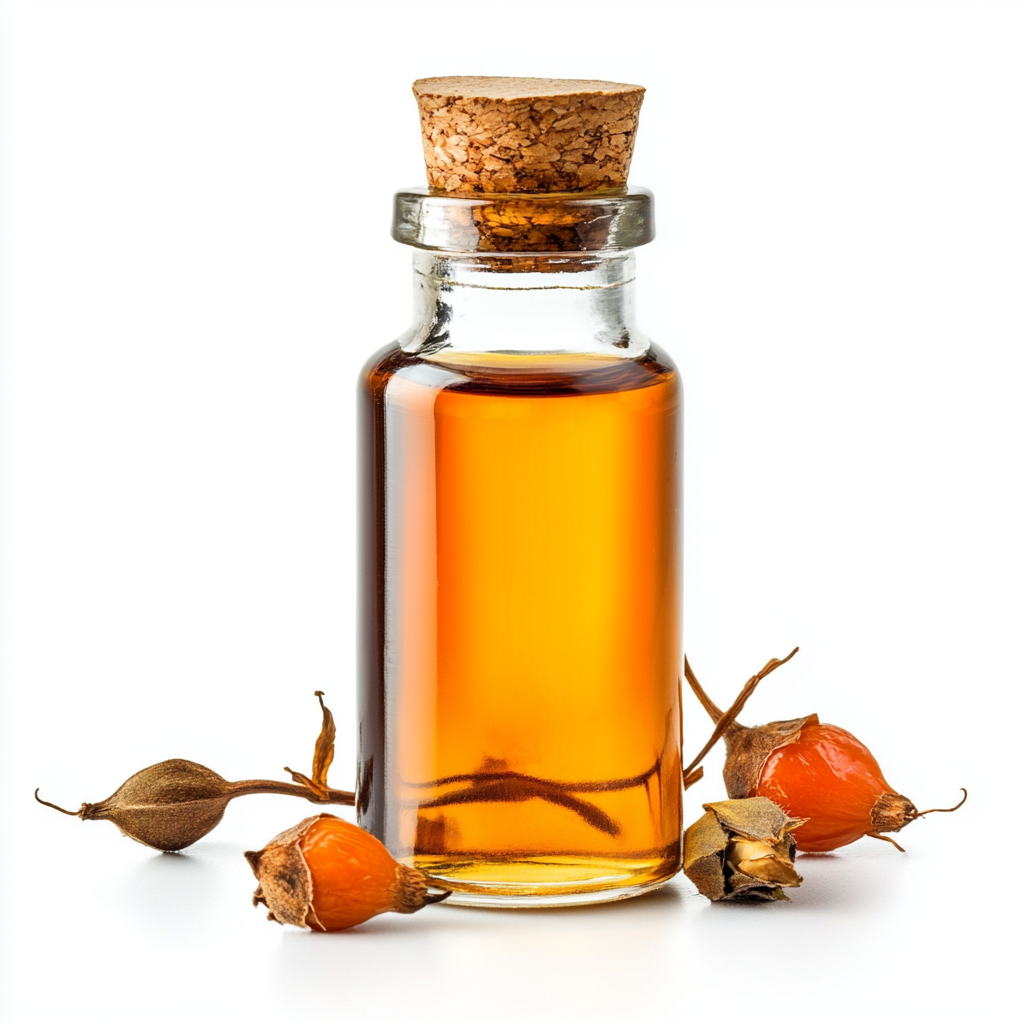


Although rose may be primarily associated with ingredients obtained from its fruits and flowers (rosehip fruit oil, rose hydrolate, rose petal macerate, rose juice), one should not forget about its seeds. Although they are usually production waste, they can be used to produce oil with numerous properties.
Rosehip seeds – characteristics
Rosehip seed oil is obtained by cold-pressing. It has a pale yellow or orange color and despite relatively low content in the raw material, it is a very efficient product. Just adding a few drops can visibly improve the effectiveness of a cosmetic.
Its composition is dominated by fatty acids – linoleic acid, linolenic acid, oleic acid and present in lower concentrations: stearic acid, palmitic acid, arachidic acid and phytosterols (β-sitosterol, stigmasterol, campesterol, Δ7-stigmastenol, Δ5-avenasterol). Moreover, rosehip seeds and the oil obtained from them are also a rich source of vitamins (A, C, E), mineral compounds (zinc, manganese, sodium, potassium, iron) and carotenoids (beta-carotene).
Properties of rosehip seed oil
Thanks to the high content of essential fatty acids, carotenoids and vitamins, rosehip seed oil shows numerous benefits for our health, particularly for the health of our skin, especially mature skin. It supports skin care, has anti-aging effects, moisturizes, smooths, and also supports scar healing, smooths wrinkles and reduces photoaging of the skin.
The compounds with strong antioxidant properties present in rosehip seed oil (carotenoids, vitamins) improve skin tone and reduce discoloration, strengthen collagen production, support cell regeneration and protect them from the negative effects of oxidative stress. At the same time, the fatty acids present in the oil show strong moisturizing effects and protect the skin from excessive water loss. Moreover, rosehip seed oil also shows anti-inflammatory and soothing properties.

Applications of rosehip seed oil
The described properties make rosehip oil characterized by numerous cosmetic applications. It can be used in dry skin care (moisturizing effect, soothing irritations), vascular skin (strengthens blood vessels), mature skin (anti-aging effect), and will be appreciated by people struggling with discoloration, imperfections and acne.
Rosehip seed oil not only effectively smooths wrinkles and reduces stretch marks, but can also be successfully used to combat the effects of skin damage. It accelerates wound healing and prevents scar formation, and also reduces the visibility of existing ones.
Thanks to its moisturizing, nourishing and caring properties, rosehip seed oil will also work well in hair cosmetics. It improves the condition of damaged hair, supports their regeneration, adds extra shine and makes combing easier. At the same time, it does not clog pores and does not weigh down hair.
How to use rosehip seed oil?
Rosehip seed oil can be applied directly to skin, hair and nails – just apply a few drops and massage thoroughly. Another way to use the properties of rosehip seed oil is to add it to a cosmetic, base or mask. The high content of fatty acids makes it easily absorbed by oily bases. Thanks to its strong properties, adding just a few drops of the preparation is sufficient, making it a very efficient product.
Dr. Katarzyna Kimel, PharmD
The product description is provided for reference purposes only. The parameters of the raw material may differ from those presented depending on the variety, intended use, method of production, season and other factors. For detailed information, please contact our sales representative.
The product description does not constitute an offer within the meaning of Article 66 § 1 of the Polish Civil Code.