


Properties and applications of coffee-derived PDRN
Coffee-derived sodium DNA acts as a skin conditioning agent. This raw material can be used in a vegan serum for daily facial care, a light emulsion or a gel mask. Its liquid form allows it to be weighed directly as an ingredient of the water phase.
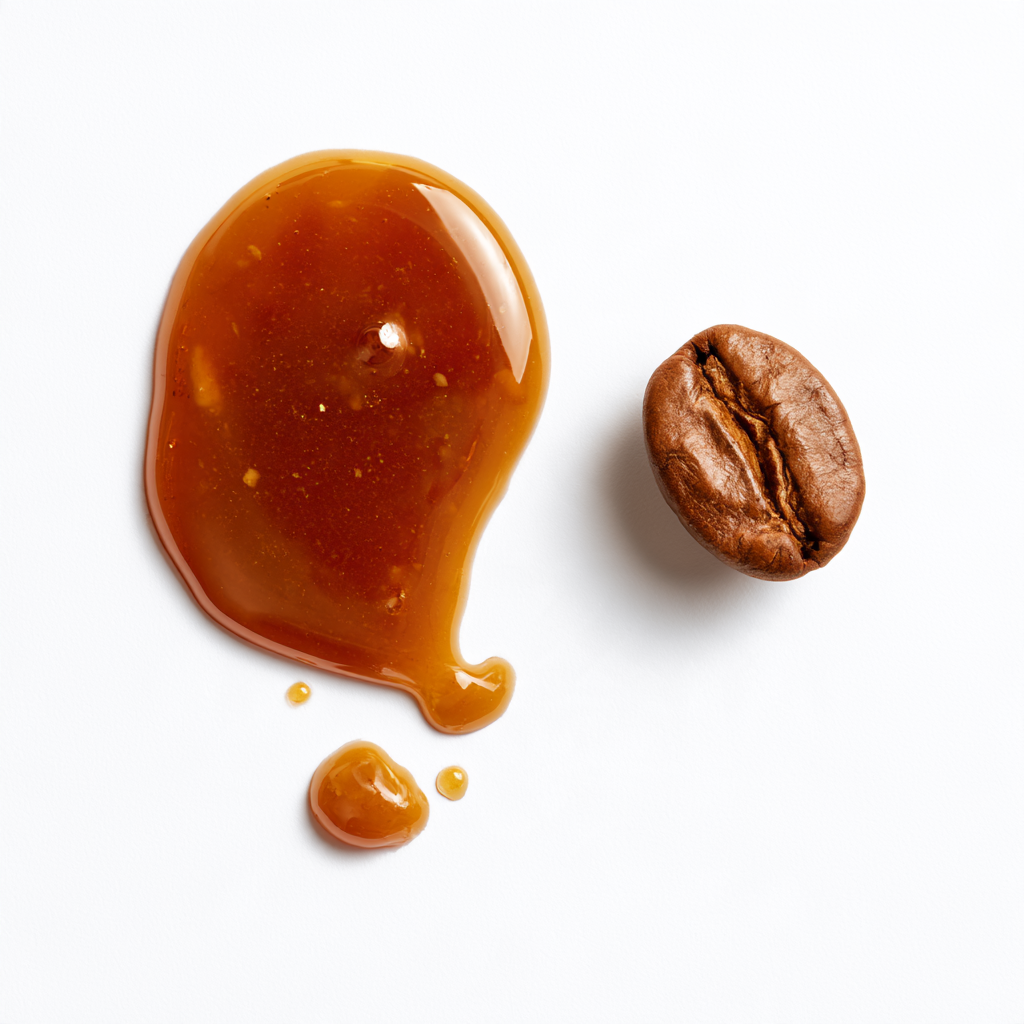
When developing a cosmetics line with coffee-derived raw materials, PDRN allows a specific amount of DNA to be added to the formulation. Its yellow-brown hue can complement a serum that showcases the natural colour of its ingredients. For a light-coloured emulsion, the inclusion level can be selected after assessing the sample’s colour.
What does coffee-derived PDRN contain?
Sodium DNA makes up 0.10–0.11% of the mixture. The carrier is water with butylene glycol, supplemented with 1,2-hexanediol and ethylhexylglycerin. The full composition can be considered when selecting this raw material for a specific base, especially if the formulation already contains glycols. The term “coffee-derived” refers to the origin of the DNA. The Sodium DNA content is the quantitative parameter to consider when purchasing this raw material.
How much Sodium DNA does the liquid raw material contribute?
At a 1% inclusion level, coffee-derived PDRN contributes a calculated 10–11 ppm of Sodium DNA to the finished cosmetic product. Doubling the inclusion level to the recommended maximum of 2% gives 20–22 ppm. When developing a light-coloured or transparent product, the acceptable colour range of the liquid should also be considered and a sample assessed in the intended base.
The product description is provided for reference purposes only. The parameters of the raw material may differ from those presented depending on the variety, intended use, method of production, season and other factors. For detailed information, please contact our sales representative.
The product description does not constitute an offer within the meaning of Article 66 § 1 of the Polish Civil Code.