


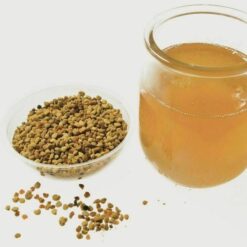
What is the difference between powdered honey and granulated honey?
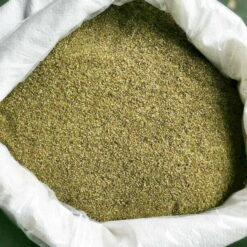
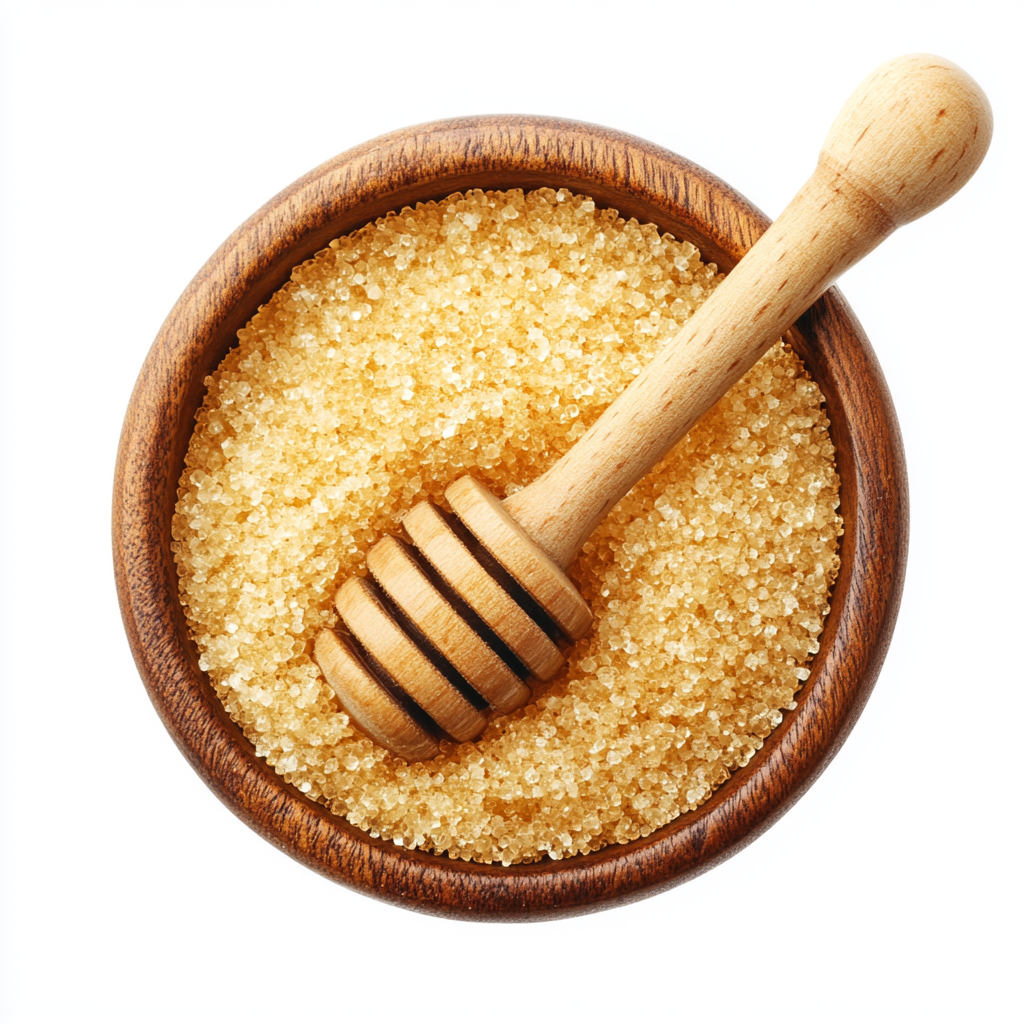
Both variants are produced by spray drying natural multifloral honey with the addition of maltodextrin as a carrier. They differ only in physical form: powdered honey has a fine, loose consistency similar to powdered sugar, while granulated honey takes a granular form, with a particle fraction of 0.5–1.6 mm. Powdered honey is fine and homogeneous, so it dissolves easily in water, milk, or creams. Granules have larger particles and can be used as a structural or decorative element.
Both forms dissolve in water and other liquids, although powder dissolves faster and more thoroughly.
Characteristics
Powdered honey and granulated honey originate from natural honey. To increase their shelf life, they have been transformed through a drying process. The granulated and powdered forms facilitate its dosing and enable the use of honey in a dry environment. The honey content in the finished raw material is over 70%, with the remainder being taste-neutral and easily digestible maltodextrin.
Honey in this form is very healthy because it retains most of honey’s bioactive properties: antibacterial, anti-inflammatory, antioxidant, and regenerating effects. They contain natural sugars and B-group vitamins (thiamine, riboflavin, pyridoxine, folic acid, nicotinic acid, pantothenic acid), as well as vitamin C and biotin.
Application
In the food industry, powdered and granulated honey are used as a sweetening ingredient in instant beverages, bars, muesli, dietary supplements, baked goods, and milk mixtures. Unlike traditional honey, these forms are stable, non-sticky, and do not ferment, making them suitable for large-scale production.
In cosmetology, honey is a valued moisturizing, regenerating, and anti-inflammatory ingredient. It is added to lotions, creams, masks, shampoos, and exfoliants – especially in products intended for dry, chapped, and problematic skin. Granules can also serve as a gentle exfoliating agent.
The product description is provided for reference purposes only. The parameters of the raw material may differ from those presented depending on the variety, intended use, method of production, season and other factors. For detailed information, please contact our sales representative.
The product description does not constitute an offer within the meaning of Article 66 § 1 of the Polish Civil Code.