



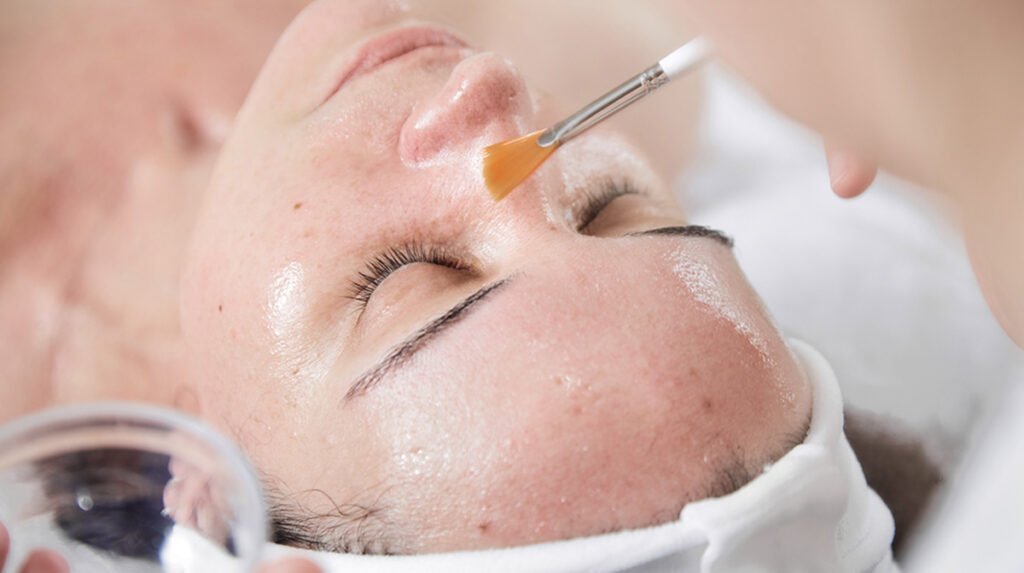
Exfoliation (the removal of dead skin cells that accumulate on the skin’s surface) is one of the most widely used skincare practices. It helps control the shedding of cells from the stratum corneum, the outermost layer of the epidermis, and can improve the skin’s appearance and condition. Its benefits include reducing roughness, smoothing uneven texture, helping reduce blackheads and making post-inflammatory hyperpigmentation less visible.
Two approaches are commonly used in both home skincare and professional treatments: enzyme peels, which use proteolytic enzymes, and acid peels, which rely on organic acids, most commonly alpha- and beta-hydroxy acids. Both methods can produce a similar outcome by accelerating exfoliation. However, they differ in their mechanisms of action, tolerability, dependence on formulation parameters and potential adverse effects.
How Peels Work in the Epidermis
Enzyme peels typically use plant-derived proteases such as papain and bromelain. Other proteolytic enzymes are used less frequently. Proteases break down proteins into smaller peptides and amino acids by hydrolysing peptide bonds. They target protein components of the structures that hold corneocytes together, including proteins associated with corneodesmosomes. Controlled breakdown of these structures helps cells detach from the stratum corneum. In practice, effectiveness depends on the actual enzymatic activity in the finished product. This activity can decline due to pH, temperature, inhibitors, preservation methods and storage time. Studies have found that some products marketed as “enzyme peels” have negligible or undetectable proteolytic activity. As proteins, enzymes may also trigger allergic reactions and, under certain conditions, affect components of the epidermal barrier.
Acid peels work primarily by altering conditions within the stratum corneum and weakening adhesion between corneocytes. This promotes the shedding of cells from the skin’s outermost layer, known as desquamation. The effect depends on the product’s parameters, particularly acid concentration, pH, acid type, formulation format (for example, a solution or an emulsion), contact time and the presence of buffering agents. The acids most commonly used in dermatology and professional skincare are AHA (such as glycolic, lactic and mandelic acid), BHA (primarily salicylic acid) and PHA (such as gluconolactone and lactobionic acid). These groups differ in skin penetration and irritation potential.
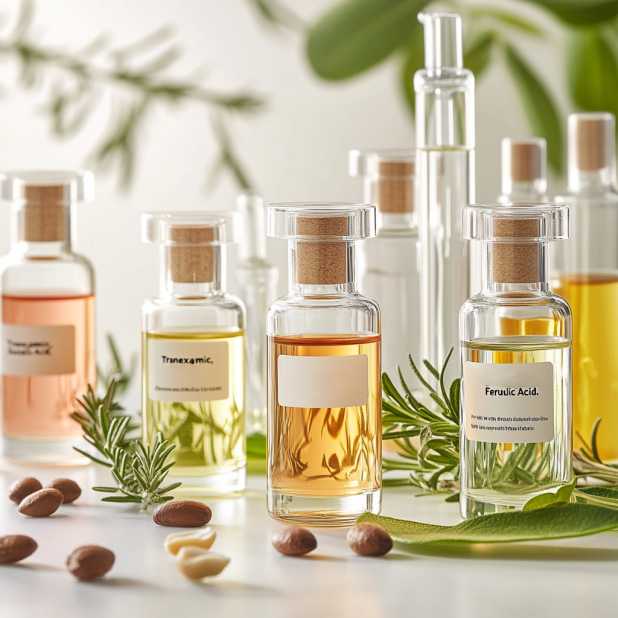
Acids
Acids represent an essential group of raw materials in the cosmetics industry. They are characterized by a wide range of actions, from gentle exfoliation of the epidermis to advanced protection against aging processes, reduction of discoloration, and overall improvement of skin condition. Our range includes both naturally derived and synthetic acids.
Functional Differences: AHA, BHA and PHA vs Enzymes
AHA are commonly used to improve skin texture, reduce uneven pigmentation and support treatments for signs of photodamage. They promote epidermal renewal and, depending on treatment conditions, may also influence processes in the dermis. Because of its low molecular weight, glycolic acid is generally considered more intensive than AHA with larger molecules, which has implications for tolerability.
BHA, represented primarily by salicylic acid, are more lipophilic. This helps them penetrate the pilosebaceous unit, which comprises the hair follicle and its associated sebaceous gland, and explains their widespread use for oily and acne-prone skin. Their comedolytic and keratolytic properties help reduce comedones and loosen accumulated keratin. Salicylic acid also has a moderate anti-inflammatory effect, which is relevant to mild to moderate acne and skin prone to blackheads and whiteheads.
PHA, such as gluconolactone, are generally described as gentler because of their larger molecular size and slower penetration. Their multiple hydroxyl groups can also contribute to moisturising effects. PHA are therefore sometimes considered for sensitive skin and skin with a weakened barrier. However, they are still acids and can cause irritation if the product or frequency of use is unsuitable.
Peeling enzymatyczny are often viewed as a gentler alternative. In practice, however, tolerability depends on enzyme activity, the overall formulation, contact time and individual skin reactivity. Their effectiveness may also be less predictable than that of acid peels if the product does not maintain stable enzymatic activity.
Benefits and Limitations of Acid and Enzyme Peels
One advantage of acid peels is that the relationship between their effects and treatment and formulation parameters is relatively well documented. This makes it easier to adjust treatment intensity. Their limitations include a risk of irritation, temporary barrier damage and increased skin reactivity, particularly at higher concentrations, low pH and with frequent use. The risk also increases when several sources of irritation are combined, such as retinoids, benzoyl peroxide, harsh cleansing agents and professional skin treatments.
One advantage of enzyme peels is that they can exfoliate without requiring a low pH, which may improve tolerability in some cases. Their limitations include dependence on enzyme stability and potentially variable activity between products. Since enzymes are proteins, the possibility of allergic reactions in susceptible individuals must also be considered.
Choosing a Peel for Different Skin Types
Dry and dehydrated skin is more likely to tolerate intensive or frequent exfoliation poorly. When the goal is to smooth the skin and improve the appearance of the stratum corneum, gentler formulations and routines may be considered. These include selected AHA with moisturising properties or PHA. For enzyme peels, shorter contact times and less frequent use may be preferable. It is essential to support the skin barrier with emollients and humectants, which attract and retain water, while avoiding the combined use of multiple irritating products.
Oily and acne-prone skin often benefits from approaches that target follicular openings and excessive keratin build-up. BHA are therefore frequently preferred. Enzyme peels can be used as a complementary option when gentler surface smoothing is the goal. However, when comedones and excess sebum are the main concerns, selecting ingredients with the appropriate activity is particularly important.
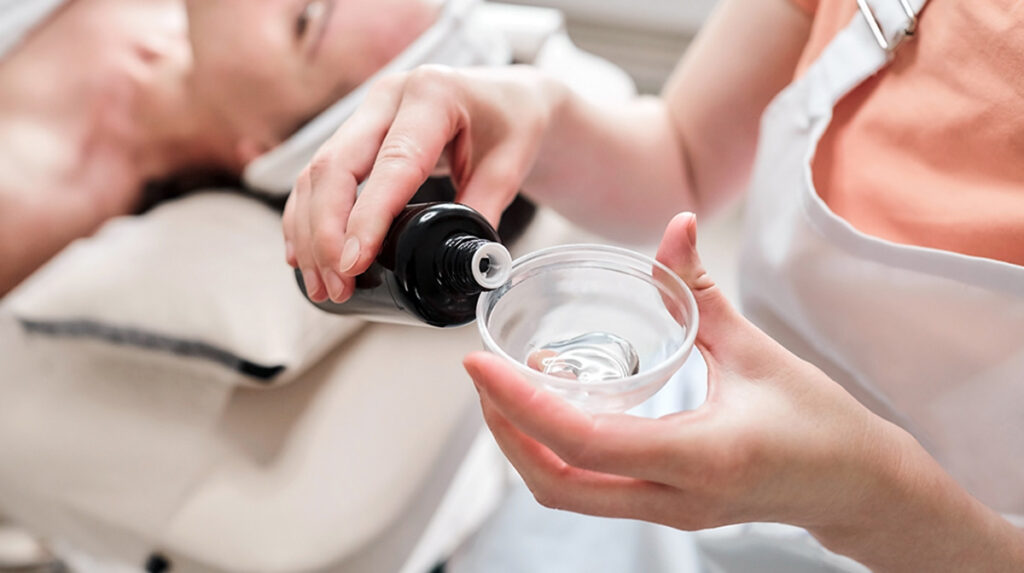
Sensitive skin requires an approach that minimises the risk of barrier damage and increased redness. PHA are often described as better tolerated than conventional AHA or BHA, while enzyme peels may be considered because they do not require a low pH. Regardless of the method, the priorities are low intensity, less frequent use, controlled contact time and testing the product on a small area to assess tolerability.
Skin with post-inflammatory hyperpigmentation and an uneven tone may benefit from exfoliation through more uniform shedding and improved light scattering at the surface. AHA and selected combination approaches are commonly used. However, irritation and inflammation can worsen post-inflammatory hyperpigmentation in some individuals, particularly those with darker skin phototypes or those undergoing aggressive treatments.
Mature skin may benefit from carefully controlled acid peel procedures. Depending on the depth of action, the aim may be to influence not only the stratum corneum but also properties of the dermis. Enzyme peels can improve surface smoothness and appearance, but they are not generally considered a means of achieving results comparable to more intensive acid peels.
Adverse Effects and Risk Factors
With acid peels, common adverse effects include redness, stinging, dryness and temporary skin flaking. Improper use may also cause erosions and exacerbate existing skin conditions. The risk increases with treatment intensity and inadequate barrier care. For BHA, it is particularly important to avoid excessive frequency and combining them with other strongly irritating ingredients within a short period.
With enzyme peels, irritation, variability in product activity and the potential for hypersensitivity reactions must all be considered. Some enzymes can also act on proteins involved in junctions between cells, which may impair barrier function under certain conditions.
Combining exfoliation with other active ingredients is another important consideration in a daily skincare routine. On days when a peel is used, limiting the simultaneous use of retinoids, benzoyl peroxide, high-concentration vitamin C formulations with a low pH and strongly degreasing products can help reduce the risk of irritation and temporary barrier impairment. After treatment, moisturising and barrier-supporting products containing ingredients such as ceramides and fatty acids help restore the skin’s protective lipid barrier. Regular sun protection is important with either type of peel, as exfoliated skin may be more susceptible to redness and pigmentation changes.
Summary
Enzyme and acid peels can produce similar outcomes by smoothing the skin and supporting its natural shedding process, but they work through different mechanisms. With either method, it is important to adjust intensity gradually, use an appropriate frequency and support the epidermal barrier. Excessive exfoliation can increase dryness, redness and sensitivity. The choice of peel should take into account skin type, the main concern and tolerance to active ingredients.
References:
1. Białkowski K. Proteolytic activity of cosmetic enzyme peel products. Acta Biochim Pol. 2022;69(4):895-899. doi:10.18388/abp.2020_6485.
2. Venetikidou M, Lykartsi E, Adamantidi T, Prokopiou V, Ofrydopoulou A, Letsiou S, Tsoupras A. Proteolytic enzyme activities of bromelain, ficin, and papain from fruit by-products and potential applications in sustainable and functional cosmetics for skincare. Appl Sci. 2025;15(5):2637. doi:10.3390/app15052637.
3. Almeman AA. Evaluating the Efficacy and Safety of Alpha-Hydroxy Acids in Dermatological Practice: A Comprehensive Clinical and Legal Review. Clin Cosmet Investig Dermatol. 2024;17:1661-1685. doi:10.2147/CCID.S453243.
4. Măgerușan ȘE, Hancu G, Rusu A. A Comprehensive Bibliographic Review Concerning the Efficacy of Organic Acids for Chemical Peels Treating Acne Vulgaris. Molecules. 2023;28(20):7219. doi:10.3390/molecules28207219.
5. Gentili G, Perugini P, Bugliaro S, D’Antonio C. Efficacy and safety of a new peeling formulated with a pool of PHAs for the treatment of all skin types, even sensitive. J Cosmet Dermatol. 2023;22(2):517-528. doi:10.1111/jocd.15215.
6. Kim HJ, Kim YH. Exploring Acne Treatments: From Pathophysiological Mechanisms to Emerging Therapies. Int J Mol Sci. 2024;25(10):5302. doi:10.3390/ijms25105302.