



Recently updated on: February 19th, 2026
Chitosan is widely used in the pharmaceutical industry and medicine. Its properties are utilized both in wound treatment and hemorrhage control, as well as in dietary supplements intended to support weight loss. What exactly is chitosan, and what sets it apart from other compounds?
Chitosan – What Is It?
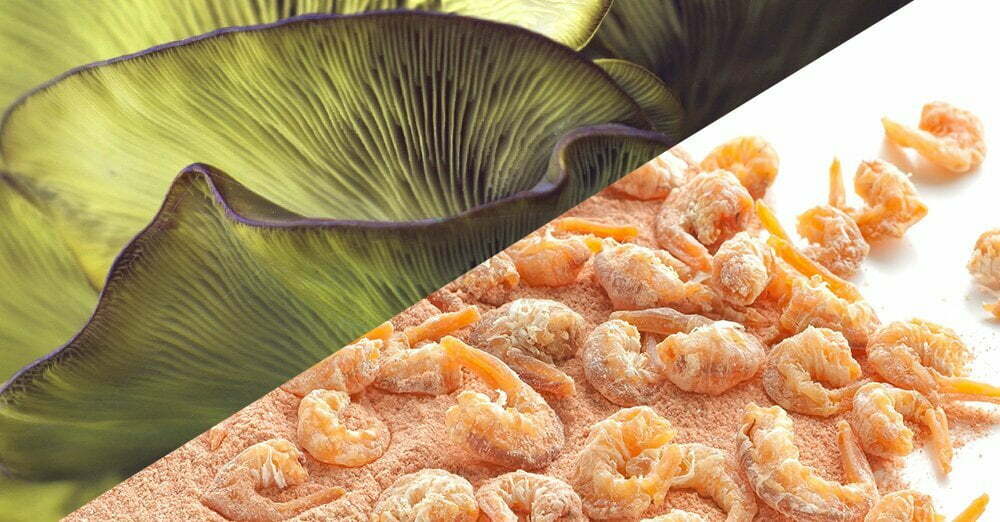
Chitosan is a linear polyaminosaccharide obtained through the partial deacetylation of chitin. It consists of a deacetylated fraction (β-(1,4)-D-glucosamine) and an acetylated fraction (N-acetyl-D-glucosamine). Chitosan is derived from the hard outer shells of crustaceans such as crabs, lobsters, and shrimp.
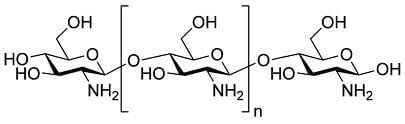
Chitosan
Chitosan is a derivative of chitin. It’s widely applied in medicine since it’ s great for stopping hemorrhages and dressing wounds.
Chitosan is also a well-known dietary supplement that helps to lose weight. It’s an organic compound belonging to the group of polysaccharides. The supplement isn’t digested by the human body.
Importantly, chitosan is not only a natural substance but also biocompatible, biodegradable, and non-toxic. At the same time, it is relatively easy to process and can be chemically or enzymatically modified into various forms. Thanks to these characteristics, it is used in medicine as a biomaterial—for example, in sutures, artificial skin, and wound dressings. Additionally, due to its ability to bind cholesterol, fats, proteins, and metal ions, chitosan is also used in oral formulations.
Vegan Chitosan
Vegan chitosan is obtained from chitin found in the structural components of fungal cell walls (e.g., Aspergillus niger). It is a non-toxic raw material with low allergenic potential and is biodegradable.
This type of chitosan can be used by vegans, vegetarians, and individuals allergic to shellfish.
Chitosan – Medical Applications
Due to its biocompatibility, biodegradability, and non-toxic nature—as well as its hemostatic, antimicrobial, and wound-healing properties—chitosan is used in dressings designed for:
- controlling bleeding,
- treating traumatic wounds,
- managing pressure ulcers and chronic wounds.
Chitosan-based products may be available in the form of powders, nonwoven fabrics, sponges, or gels and can function both as wound dressings and artificial skin. Its therapeutic effectiveness is primarily attributed to its cationic nature and hydrophilicity. Chitosan stimulates macrophages and neutrophils that combat pathogens in the body, enhances cellular activity (including fibroblasts responsible for collagen and elastin production), promotes cytokine production, and supports angiogenesis. As a result, it accelerates wound healing, stimulates granulation tissue formation, and helps reduce scar formation.
Chitosan for Weight Management
Chitosan is not only used in wound care but also as an ingredient in orally administered products. In the gastrointestinal tract, it exhibits absorption properties that reduce the uptake of dietary fats. Based on this mechanism, chitosan may contribute to improvements in BMI, lipid profile, and cardiovascular health. Animal studies have also indicated potential antidiabetic effects. In tested rats, reduced blood glucose levels and improved insulin sensitivity were observed. As a result, dietary supplements containing chitosan are used both to support weight management and as part of the prevention strategy for lifestyle-related diseases such as obesity, hypertension, and diabetes.
Literature:
- https://materialyinzynierskie.pl/chitozan/
- Mazurek P, Kuliński S, Gosk J. Możliwości wykorzystania chityny i chitozanu w leczeniu ran. Polim. Med. 2013, 43(4), 297–302.
- Jonczyk P, Kandefer B, Potempa M i wsp. Chitosan a gospodarka węglowodanowo-lipidowa. Forum Zaburzeń Metabolicznych 2016, 7(1), 31-34.
- Cheung RCF, Ng TB, Wong JH, Chan WY. Chitosan: An Update on Potential Biomedical and Pharmaceutical Applications. Mar. Drugs 2015, 13(8), 5156-5186.