






Rhizome
A rhizome is a thickened underground plant stem that functions as a storage, perennating and vegetative propagation organ. Unlike a root, a rhizome has buds, nodes and internodes, allowing it to produce new above-ground shoots and adventitious roots. This part of the plant is exceptionally rich in biologically active compounds, which are often present in much higher concentrations than in stems or leaves. Rhizomes therefore provide a valuable source of raw materials for the dietary supplement, cosmetics and pharmaceutical industries.
Valuable secondary metabolites accumulate in plant rhizomes, including alkaloids, saponins, flavonoids, tannins, essential oils, glycosides and lignans. Due to the presence of these compounds, raw materials obtained from rhizomes exhibit a broad spectrum of activity, ranging from adaptogenic and anti-inflammatory to calming, immunomodulatory and toning effects. As a storehouse of substances that support plant survival, the rhizome plays a key role in the plant’s defence strategy. Once processed into extracts, these compounds are used to support the physiological balance of the human body.
Applications
Rhizome-derived raw materials are used in traditional medical systems, such as Ayurveda and Chinese medicine, as well as in modern phytotherapy and cosmetology. They are included in formulations designed to support immunity, hormonal balance and the functioning of the nervous and digestive systems. In cosmetics, they are used for their antioxidant, soothing, brightening and skin-regulating properties.
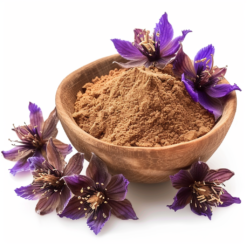
Plant extracts
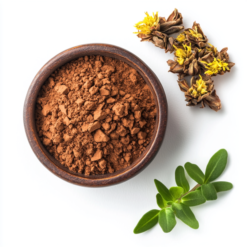
Plant extracts